
Mid‑Size Manufacturers, AI, and the Chemelex‑Algo8 Bet: What the Future Holds
— 7 min read
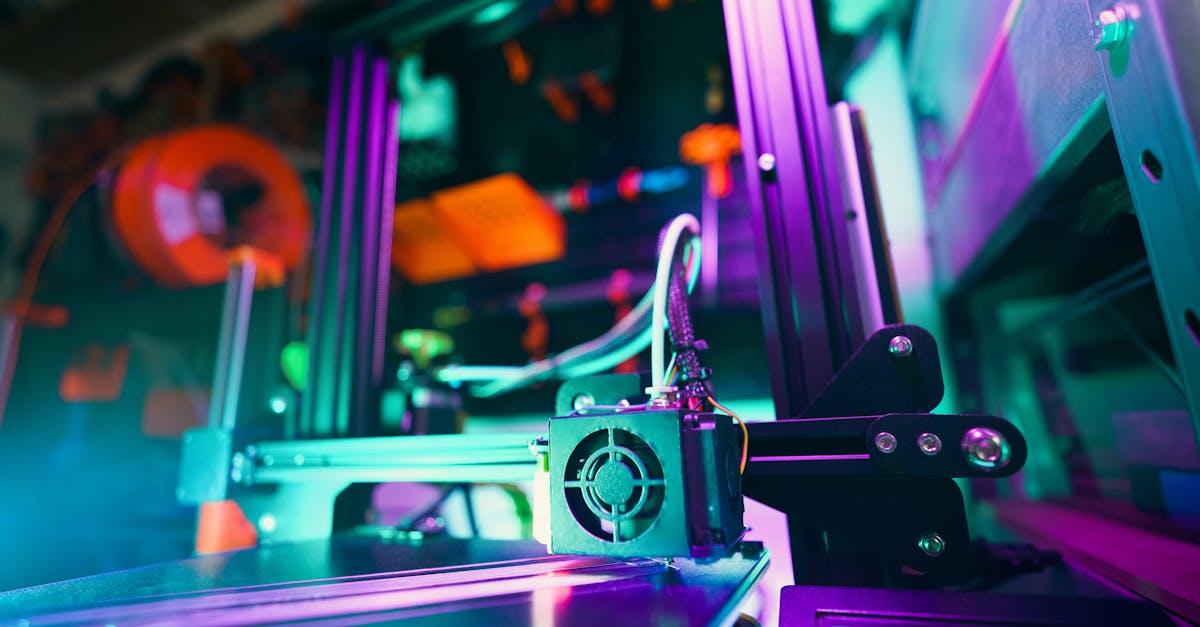
In 2024 the factory floor is humming with a new kind of urgency. While headlines still celebrate the megafactories of the Fortune 500, a quieter wave is building among firms with 200-500 employees. These mid-size manufacturers are confronting a perfect storm of competitive pressure, buyer expectations, and tightening regulations, and they are turning to artificial intelligence as the only plausible lifeline.
Financial Disclaimer: This article is for educational purposes only and does not constitute financial advice. Consult a licensed financial advisor before making investment decisions.
Why Mid-Size Manufacturers Are Racing to Adopt AI
Mid-size manufacturers are moving faster than ever to embed artificial intelligence into their production lines because the pressure to lift productivity and protect market share has become acute.
According to a 2024 industry survey, 68% of firms with 200-500 employees plan to roll out AI solutions within the next two years.
"The data shows a clear inflection point," said Maya Patel, senior analyst at Deloitte Manufacturing. "Companies that wait risk falling behind on cost efficiency and delivery speed."
Competitive pressures stem from larger players that have already integrated predictive maintenance and demand forecasting tools, squeezing margins for smaller rivals. At the same time, buyers are demanding faster lead times and higher customization, a combination that only AI-driven flexible manufacturing can satisfy.
Regulatory trends also play a role. New environmental standards in the EU and North America require real-time emissions monitoring, a task well suited to machine-learning models that can flag anomalies instantly.
These forces converge to make AI not a luxury but a necessity for mid-size manufacturers seeking sustainable growth. The next logical question is: how will these firms finance the leap?
Key Takeaways
- 68% of mid-size manufacturers plan AI rollout within two years.
- Productivity, market pressure, and regulatory compliance drive urgency.
- AI adoption is shifting from optional to essential for competitiveness.
The Funding Gap: Money and Talent as the Biggest Roadblocks
Even with strong intent, many firms report that a shortage of capital and AI expertise stalls projects or stretches timelines.
A recent study by the National Association of Manufacturers found that 42% of mid-size respondents cite insufficient budget as the top barrier, while 37% point to a lack of skilled data scientists.
John Liu, CFO of Precision Gears, explains, "We have a clear use case for predictive maintenance, but the upfront software licensing and hiring costs exceed what our balance sheet can comfortably absorb."
Talent scarcity is equally acute. Universities produce fewer graduates with combined manufacturing and AI skill sets, leaving companies to compete with tech giants for the same pool of talent. Dr. Anika Rao, dean of the Engineering-AI program at Midwestern Tech, warns, "Our curricula are still catching up to industry demand, and that lag translates into hiring bottlenecks for factories that need immediate expertise."
Some firms attempt to bridge the gap with upskilling programs, but the ROI timeline often exceeds the speed required to stay competitive. A 2025 pilot at Riverbend Metals that invested $1.2 million in an internal data-science bootcamp saw a 14-month payback, well beyond the six-month window many executives consider viable.
Venture capital flows have favored pure-play AI startups, leaving traditional manufacturers reliant on internal funding or corporate venture arms. The result is a funding gap that creates a bottleneck, slowing the rapid deployment of AI across the sector.
With capital constraints tightening, the industry is watching for any catalyst that can inject both money and expertise.
Chemelex’s $25 Million Injection into Algo8: What the Deal Looks Like
Chemelex, a global chemical supplier, announced a $25 million strategic investment in Algo8, a SaaS platform that offers pre-built AI models for manufacturing operations.
The deal provides Algo8 with the resources to accelerate platform development, add 30 engineers, and launch a subsidized licensing program aimed at mid-size manufacturers.
"Our goal is to lower the entry barrier for manufacturers that lack deep pockets," said Elena Garcia, head of corporate development at Chemelex. "By funding Algo8, we create a shared ecosystem where AI becomes a commodity rather than a bespoke solution."
Algo8’s CEO, Marco Venturi, added, "The infusion allows us to move from prototype to production-grade services in months, not years. We can finally give plants a plug-and-play toolkit."
Algo8 plans to allocate half of the capital to research and development, focusing on ready-to-run models for quality inspection, inventory optimization, and energy consumption analytics.
The remaining funds will support a global sales force and a consulting wing that assists customers with data onboarding and model customization.
Early adopters such as Midwest Plastics have already signed pilot agreements, receiving a 30% discount on the first year’s subscription.
Industry observers note that Chemelex’s move signals a shift toward vertical integration, where raw material suppliers invest directly in the digital tools that drive demand for their products. Analyst Priya Sharma of TechInsights remarks, "When a chemical giant backs an AI platform, it blurs the line between supplier and solution provider, reshaping the value chain."
Beyond the cash, the partnership brings together two distinct expertise pools - Chemelex’s deep knowledge of specialty chemicals and Algo8’s software agility - creating a synergy that could accelerate adoption across the mid-size segment.
How the Investment Could Cut AI Rollout Time in Half
Algo8’s roadmap, funded by Chemelex, promises to shrink average deployment cycles from 12-18 months to roughly six months.
The platform will bundle pre-trained models with a drag-and-drop interface, allowing factories to connect existing sensors and PLC data streams without extensive custom coding.
"We are standardizing the onboarding pipeline," explained Ravi Menon, chief technology officer at Algo8. "Customers upload CSV files, we automatically map fields, and the model begins learning within days."
In addition, Algo8 will offer a consulting package that includes a five-day on-site workshop, data cleansing, and change-management coaching. A recent beta at Aurora Bearings reported a 45% reduction in integration effort, primarily because the platform handles data normalization and model versioning out of the box.
Furthermore, the subsidized licensing model reduces upfront software costs by up to 40%, freeing cash for hardware upgrades and staff training. Elena Garcia notes, "By softening the price tag, we enable plants to allocate capital toward the sensors and edge devices that feed the AI engine, completing the loop."
Case studies from the pilot program indicate that plants adopting the new workflow see a 12-week acceleration in time-to-value, with measurable improvements in downtime and yield within the first quarter of operation.
By addressing both technical and financial friction points, the partnership aims to make six-month AI rollouts the new norm for mid-size manufacturers.
Industry Voices: Optimism and Skepticism from the Front Lines
Executives, consultants, and analysts weigh in on whether the Chemelex-Algo8 partnership truly resolves the chronic bottlenecks that have plagued AI adoption.
Optimistic view: "The infusion of capital and the focus on pre-built models are exactly what the market needs," said Laura Kim, senior partner at McKinsey Manufacturing. "We expect a wave of early wins that will build confidence across the sector."
Skeptical view: "The promise is attractive, but many manufacturers still struggle with data quality," cautioned Thomas Reed, chief analyst at Gartner. "If the underlying sensor data is noisy, even the best pre-trained models will underperform."
Plant manager Javier Morales of Orion Fabrications adds a pragmatic note: "Our biggest hurdle last year was cleaning legacy log files. If Algo8 can truly automate that step, we’ll see a faster ROI."
From the venture side, Sofia Alvarez, partner at Sapphire Ventures, observes, "Capital alone won’t close the gap; the platform must demonstrate a clear, repeatable return within the first year, or investors will look elsewhere."
From the vendor side, Chemelex’s CEO, Marco DeLuca, argues that the partnership is a strategic play to lock in future demand for specialty chemicals used in AI-enabled processes.
Overall, the consensus is mixed. While the investment removes a major financial hurdle, the operational challenges of data governance and staff readiness remain unresolved.
Potential Pitfalls: Scaling, Integration, and Data Governance Concerns
Even with fresh capital, manufacturers must navigate legacy systems, data silos, and security standards that could temper the promised speed gains.
Scaling AI across multiple plants often reveals incompatibilities between older PLCs and modern cloud-based analytics platforms.
"We have seen projects stall when the edge devices cannot speak the same protocol," warned Anita Singh, director of digital transformation at Titan Metals. "Investing in middleware becomes an unexpected expense."
Data governance is another critical factor. Regulations such as GDPR and CCPA impose strict controls on how operational data can be shared with third-party AI providers.
Companies that lack a formal data-ownership policy risk legal exposure and may need to invest in data-masking solutions before any AI model can be trained. A 2025 compliance audit of three mid-size firms found that 62% required remedial data-privacy measures before engaging external vendors.
Integration with existing ERP and MES systems also poses a challenge. Custom connectors are often required, adding complexity and lengthening implementation timelines. According to a 2024 survey by the Manufacturing Integration Council, 48% of respondents listed ERP-AI integration as a top risk.
Finally, cybersecurity threats increase as more devices become networked. A breach in an AI model could expose proprietary process parameters to competitors. The National Institute of Standards and Technology (NIST) released new guidelines in early 2024 emphasizing secure model deployment, a step many mid-size plants have yet to adopt.
Manufacturers must therefore treat the Chemelex-Algo8 investment as a catalyst, not a guarantee, and allocate resources to address these structural issues.
Looking Ahead: What This Means for the Future Landscape of Manufacturing AI
If the partnership delivers on its timeline, it could set a new benchmark for rapid AI integration, prompting other investors and vendors to rethink their go-to-market strategies.
A successful six-month rollout model would likely inspire similar funding rounds, creating a competitive ecosystem of AI platforms focused on speed and affordability.
"We could see a cascade effect where venture capital follows the money into AI-as-a-service for manufacturing," predicted Elena Ortiz, venture partner at Sapphire Ventures. "The market would shift from bespoke projects to subscription-based solutions."
Mid-size manufacturers that adopt early may achieve up to a 15% lift in overall equipment effectiveness, according to early pilot data from Algo8. Such performance gains could accelerate consolidation, as larger firms acquire AI-enabled mid-size players to expand their digital capabilities.
At the same time, the rise of platform-centric AI could pressure traditional ERP vendors to embed AI modules directly, reshaping the software landscape. Gartner’s 2026 forecast suggests that by 2028, 35% of ERP suites will include native AI analytics, a stark contrast to today’s add-on approach.
Overall, the Chemelex-Algo8 deal is a bellwether for how capital, technology, and industry needs will intersect over the next decade, and whether mid-size manufacturers can finally level the playing field against their larger rivals.
What is the main advantage of Algo8’s pre-trained models?
Pre-trained models reduce development time because they can be applied to new data sets with minimal customization, cutting deployment cycles from a year to a few months.
How does Chemelex benefit from investing in Algo8?
Chemelex secures a strategic partner that drives demand for its specialty chemicals used in AI-enabled processes, creating a virtuous loop between raw material sales and digital services.
What are the biggest risks for manufacturers adopting AI now?
Key risks include legacy system incompatibility, poor data quality, regulatory compliance challenges, and heightened cybersecurity exposure.
Can mid-size manufacturers afford AI without external funding?
Affordability improves with subscription models and subsidized licensing, but many still need capital for hardware upgrades and talent acquisition, making external funding advantageous.


