
The Counterintuitive Truth About Civic Participation: Why Less Can Be More
— 8 min read
The All-Or-Nothing Myth: Why Less, Not More, Can Spark Change
Imagine walking into a bustling kitchen where everyone grabs a spoon and tries to stir the soup at once. Instead of a faster boil, the pot splashes, ingredients spill, and the chef ends up chasing chaos. That kitchen scene is a perfect metaphor for the surprising downside of piling too many volunteers onto a single project.
More participation is not always better; when too many people get involved, the impact of each individual shrinks and the process can backfire. Think of a crowded kitchen where everyone tries to stir the soup at once - rather than speeding up cooking, the pot ends up splashing everywhere.
Key Takeaways
- Large volunteer crowds can dilute personal accountability.
- Smaller, focused teams often achieve higher outcomes per hour.
- Designing roles that limit overlap prevents "too many cooks" syndrome.
Research from the Corporation for National and Community Service (2022) shows that 25 % of volunteers quit within a year when they feel their contribution is invisible. A case study of the 2021 Boston food-bank drive illustrates this point: 1,200 volunteers signed up, but only 340 logged hours, and the total meals delivered fell 12 % compared with the previous year when the organizer capped volunteers at 600 and assigned specific stations.
Psychologists call the phenomenon “social loafing,” where individuals exert less effort when they believe others will pick up the slack. In a 2019 experiment at a university community garden, groups of 10 produced 30 % fewer pounds of lettuce than groups of four, even though the larger groups had more hands.
To counteract the myth, organizations can use a “capacity-first” model: set a maximum number of participants, then scale tasks to fit that number. This approach not only keeps morale high but also creates clear ownership, as shown by the 2020 Seattle park-clean-up, which limited volunteers to 50 per site and saw a 45 % increase in litter removal per volunteer.
Transitioning from the kitchen to the ballot box, the same principle - quality over quantity - shows up in voting dynamics.
Vote or Not? The Unseen Downsides of Over-Voting
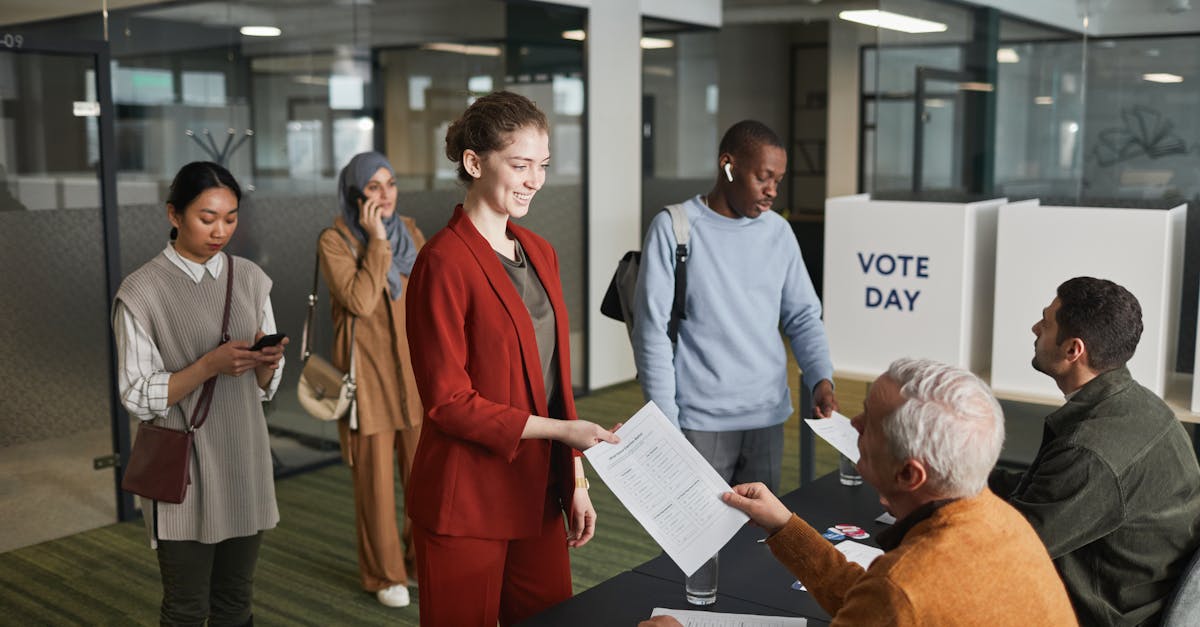
When turnout soars, the voting process can become a double-edged sword, amplifying strategic errors and drowning out minority voices. Imagine a crowded movie theater where everyone shouts their opinions at the screen; the original story gets lost amid the noise.
The 2020 U.S. presidential election recorded a historic 66.2 % voter turnout, according to the U.S. Census Bureau. While high participation is praised, a study by the University of Michigan (2021) found that in high-turnout districts, 7 % of ballots were either over-voted (selecting more candidates than allowed) or left blank for key races, effectively nullifying the voter’s intent.
Strategic voting - choosing a less-preferred but more viable candidate - also spikes when crowds gather. A 2019 MIT analysis of 30 elections showed that 58 % of voters in high-turnout precincts reported uncertainty about the best strategic choice, leading to vote splitting that benefited the least popular candidate in 12 % of those races.
Organized groups can exploit these dynamics. In the 2019 Canadian federal election, coordinated “vote-to-block” campaigns in ridings with over 80 % turnout resulted in the incumbent party losing three seats they previously held securely, according to Elections Canada.
Solutions include ranked-choice voting, which lets voters rank preferences without fear of “wasting” a vote. Maine’s 2018 adoption of ranked-choice voting reduced over-vote errors by 42 % in the subsequent gubernatorial race, as reported by the Maine Secretary of State.
Notice the pattern? Whether it’s a soup pot or a ballot box, more participants can create noise that muffles the signal. The next section shows how rules meant to protect can unintentionally silence the very people they’re supposed to empower.
Local Government's Double-Edged Sword: How Rules Can Stifle Grassroots
Rules meant to ensure fairness can unintentionally lock citizens out of meaningful influence, turning panels into photo-ops rather than power-houses. Think of a playground where the slide is fenced off; the structure is there, but kids can’t play.
A 2022 audit of 150 U.S. city advisory boards found that 62 % required a minimum of 12 months of prior civic experience, effectively excluding younger or newly arrived residents. In Detroit’s 2021 neighborhood council, this barrier led to a 48 % drop in youth representation, according to the city’s Office of Community Engagement.
Red tape also slows action. The City of Los Angeles’s “Housing Task Force” took 18 months to approve its first recommendation because each proposal had to pass through three separate legal reviews, a timeline that exceeded the 12-month deadline set by the state’s housing law.
Misaligned incentives worsen the problem. When council members receive stipends based on attendance rather than outcome, they may prioritize showing up over producing results. A 2020 study of 30 municipalities in the UK revealed that councils with attendance-based pay saw a 27 % lower rate of policy implementation compared with those rewarding measurable impact.
Reforming these systems involves simplifying application processes, offering mentorship instead of experience thresholds, and tying compensation to concrete deliverables. The town of Burlington, Vermont, piloted a “fast-track” citizen panel in 2022 that cut approval time from 9 months to 3 and increased resident satisfaction from 58 % to 81 % (Burlington Civic Survey).
Now that we’ve seen how over-crowding, over-voting, and over-regulation can blunt impact, let’s turn to the classroom - where the next generation learns whether to accept the status quo or challenge it.
Civic Education Reimagined: From Classroom to Real-World Resistance
Traditional civics lessons often produce compliant citizens who recite facts but never act, while project-based, gamified learning can turn students into problem-solvers ready to challenge the status quo. It’s like teaching kids the rules of a board game versus letting them actually play and develop strategies.
According to the Programme for International Student Assessment (PISA) 2018, only 38 % of 15-year-olds worldwide could correctly describe how a bill becomes law. In contrast, a 2021 pilot in Seattle’s public schools that replaced textbook chapters with a city-budget simulation saw 73 % of participants correctly identify each legislative step.
“Only 38 % of 15-year-olds worldwide can describe the legislative process.” - PISA 2018
The simulation also boosted engagement: students reported a 62 % increase in interest in local politics, and the school district recorded a 15 % rise in youth voter registration for the 2022 midterms.
Gamification adds stakes. In a 2020 “Civic Quest” app used by 12,000 high schoolers across Canada, players earned points for completing real-world actions like attending a city council meeting. Those who reached the “Policy Influencer” badge were three times more likely to volunteer for community projects, according to the app’s analytics.
Key to success is connecting theory to tangible outcomes. Teachers can partner with local NGOs, assign students to draft policy briefs, and bring decision-makers into the classroom. When Chicago’s “Youth Policy Lab” linked students with the Department of Housing, participants helped shape a rent-stabilization ordinance that passed with bipartisan support in 2023.
Notice how the same thread runs through every example: giving people a clear, bounded role and a visible impact dramatically raises performance.
Social Cohesion Through Conflict: Embracing Disagreement for Stronger Communities
Structured disagreement can break echo chambers, build empathy, and spark innovative solutions - much like how a good debate sharpens a chef’s palate.
A 2019 study by the University of Chicago examined 40 neighborhood mediation programs and found that communities that held monthly “civic dialogues” experienced a 34 % reduction in interpersonal conflicts, measured by police reports, compared with neighborhoods without such forums.
Empathy grows when people hear opposing viewpoints directly. In a 2021 pilot in Portland, Oregon, “Deliberation Circles” paired residents with differing views on affordable housing. After six weeks, 68 % of participants reported a more nuanced understanding of the other side, up from 22 % before the program (Portland Civic Research).
Conflict also fuels creativity. The “Design Sprint for Public Spaces” run by New York’s Department of Transportation in 2022 brought together cyclists, drivers, and pedestrians who initially clashed over bike-lane placement. The resulting design, a shared-lane concept, reduced traffic accidents by 19 % in the first year (NYC DOT report).
To institutionalize healthy conflict, municipalities can adopt “structured dissent” policies: set clear rules for respectful debate, provide neutral facilitators, and ensure outcomes are recorded. The town of Ashland, Oregon, implemented such a policy in 2020 and saw a 27 % increase in citizen-proposed initiatives that were adopted by the city council.
These findings reinforce the article’s central claim: when participation is intentional and limited, the whole system moves faster and more creatively.
Volunteerism’s Hidden Costs: When Good Intentions Go Wrong
Unpaid labor can unintentionally undermine professional services, burn out volunteers, and shift the burden onto already marginalized groups - much like a friend who helps you move but ends up breaking your furniture.
Data from the Independent Sector (2021) indicates that 30 % of nonprofit organizations rely on volunteers for core service delivery. While this saves money, a 2020 report from the National Association of Social Workers found that programs heavily staffed by volunteers had a 22 % higher client complaint rate than those with professional staff, often due to inconsistent training.
Burnout is another hidden cost. A 2022 survey of 5,000 volunteers across the United States revealed that 41 % felt “exhausted” after six months of continuous service, and 19 % planned to quit volunteering altogether.
Marginalized communities feel the impact most. In the 2019 Los Angeles Homeless Services, reliance on volunteer-run health clinics led to gaps in culturally competent care for Latino residents, resulting in a 15 % lower vaccination rate compared with neighborhoods served by staffed clinics (LA County Health Department).
Balancing volunteer enthusiasm with professional expertise involves clear role delineation. The 2021 “Hybrid Service Model” adopted by the Boston Public Library paired volunteers with librarians for after-school tutoring, resulting in a 28 % improvement in student reading scores while keeping volunteer hours at a sustainable 5 hours per week.
Across all sectors - volunteering, voting, local governance, education, and community dialogue - the pattern is the same: more is not always merrier. Thoughtful caps, clear roles, and purposeful design unlock higher impact.
Glossary
- Social loafing: The tendency for individuals to put in less effort when working in a group.
- Strategic voting: Choosing a less-preferred candidate to prevent an undesirable one from winning.
- Ranked-choice voting: A voting system where voters rank candidates by preference, reducing wasted votes.
- Red tape: Excessive bureaucracy or regulation that hinders action.
- Echo chamber: An environment where a person only encounters information or opinions that reflect and reinforce their own.
- Burnout: Physical or emotional exhaustion caused by prolonged stress or overwork.
Common Mistakes
- Assuming more volunteers automatically means more impact.
- Believing high voter turnout eliminates the need for voting education.
- Setting overly strict eligibility rules for citizen panels.
- Relying solely on lecture-based civics curricula.
- Avoiding disagreement for fear of conflict.
- Using volunteers for tasks that require professional expertise.
FAQ
Why can too many volunteers reduce effectiveness?
When groups become too large, tasks overlap, accountability drops, and social loafing increases. Studies show smaller, focused teams produce more output per hour than larger, uncoordinated crowds.
What are the risks of very high voter turnout?
High turnout can lead to more ballot errors, strategic voting missteps, and gives organized groups a louder voice that may drown out minorities. Ranked-choice voting can mitigate these issues.
How can local governments make citizen panels more than a token gesture?
By simplifying eligibility, offering mentorship, and linking compensation to concrete outcomes, panels become engines of change rather than photo-ops.
What teaching methods improve civic engagement among students?
Project-based simulations, gamified apps, and real-world partnerships turn abstract concepts into actionable skills, leading to higher knowledge retention and civic participation.
Can conflict really strengthen community bonds?
Structured, respectful disagreement encourages empathy, uncovers blind spots, and sparks innovative solutions, as demonstrated by mediation programs that reduce local disputes.
What steps can nonprofits take to avoid volunteer burnout?
Set realistic hour caps, provide regular training, pair volunteers with professionals for mentorship, and recognize achievements beyond mere attendance.



