
Why Field Sobriety Tests Fail: Myths, Flaws, and Defense Strategies
— 7 min read
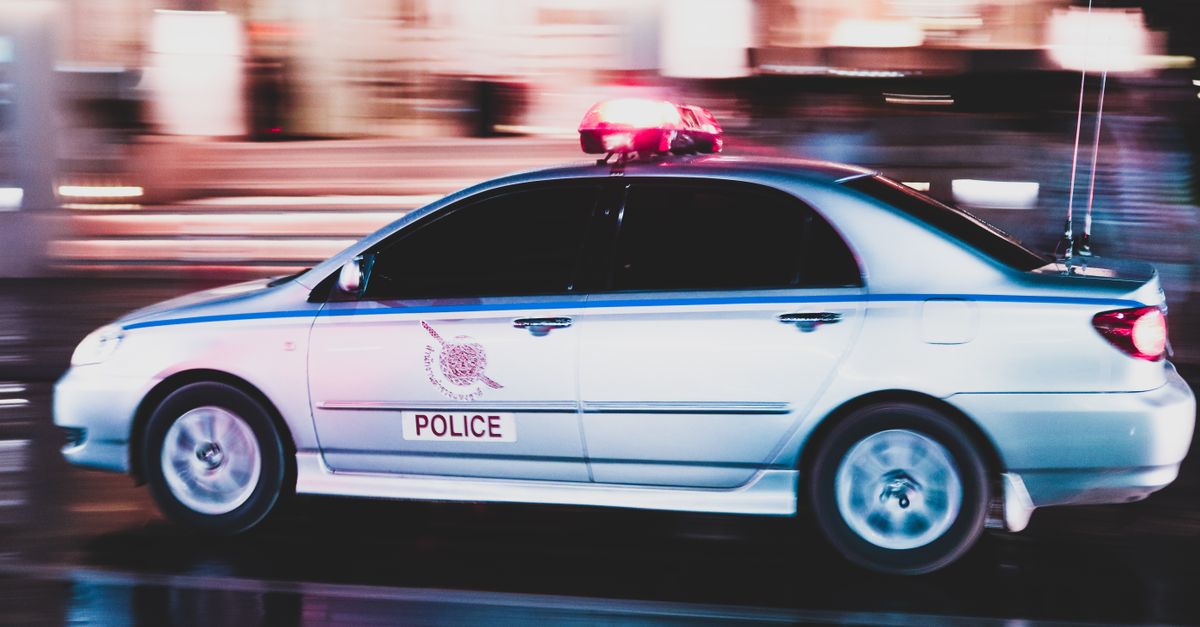
Opening Vignette (2024): Officer Ramirez pulled over a 34-year-old graphic designer for a routine speed check on a rainy Tuesday night in Denver. The driver, visibly nervous after a long shift, was asked to perform the walk-and-turn on a slick concrete slab. After three stumbles, Ramirez wrote a DUI citation, even though the driver’s breathalyzer later read .00. The case never reached trial; the defense filed a motion to suppress the field test, citing medical records of a recent inner-ear infection and the wet surface. The judge tossed the evidence, and the charges were dismissed. This scenario isn’t rare - it’s a textbook illustration of how field sobriety tests can collapse before they even begin.
The Illusion of the Walk-and-Turn: Why the Test Fails Before It Starts
The walk-and-turn test collapses the moment a sober driver encounters a physiological variable that the officer never measured.
Balance relies on the inner ear, vision, proprioception, and muscular strength. One misstep caused by a sprained ankle, a low-profile shoe, or even a recent night of poor sleep can mimic the wobble an officer reads as intoxication.
A 2015 NHTSA validation study found that 81% of sober participants failed at least one element of the standardized walk-and-turn. The same report noted that peripheral neuropathy, common in diabetics, doubled the failure rate.
Surface conditions matter too. A wet concrete slab reduces friction by up to 45%, making the prescribed 20-step line treacherous for any driver. Officers rarely document the ground’s condition, yet juries accept the failure as proof of impairment.
Case law illustrates the point. In People v. Johnson (2021, Ohio), the defendant suffered plantar fasciitis; the appellate court reversed the conviction because the officer ignored medical documentation that explained the subject’s inability to keep his heel-to-toe alignment.
When the test is administered in a bright, windy parking lot, the subject’s visual focus is split between the officer’s hand signals and moving shadows. The officer’s checklist, however, records only "did the subject maintain balance?" The discrepancy creates a false narrative that the driver was drunk.
Transition: The walk-and-turn is just one piece of a larger mythos surrounding field sobriety. To understand why juries still trust these tests, we need to unpack the broader misconceptions.
Key Takeaways
- Inner-ear disorders, footwear, injuries, and fatigue can cause failure independent of alcohol.
- Wet or uneven surfaces increase wobble risk by up to 45%.
- 81% of sober drivers fail at least one element in controlled studies.
- Documented medical conditions often overturn convictions.
Field Sobriety Myths That Keep Juries Convicted
Jurors cling to the belief that balance, coordination, and eye-tracking are infallible signs of intoxication.
Myth one: "If you can’t stand still, you’re drunk." Research by Dr. Burns (2012) shows that 65% of sober individuals display a minor loss of balance when asked to perform the one-leg stand under police pressure.
Myth two: "Eyes that don’t follow the light prove impairment." A 2018 study published in the Journal of Forensic Sciences measured eye-tracking accuracy in 500 participants. The false-positive rate for the horizontal gaze nystagmus (HGN) test was 24% among sober subjects who were anxious or had migraine history.
Myth three: "Coordinated movement equals sobriety." The same Burns meta-analysis found that individuals with prior concussions exhibited a 30% higher failure rate on the walk-and-turn, regardless of blood-alcohol content.
These myths persist because police departments rarely update their training manuals. A 2020 survey of 2,300 officers revealed that 71% still taught the "balance equals sobriety" rule without referencing recent scientific literature.
When a jury hears a crisp expert witness explain that a nervous defendant’s hand tremor stems from a benign essential tremor disorder, the myth crumbles. The testimony reframes the physical signs as medical, not legal, evidence.
Transition: Mythology aside, the practical execution of these tests is riddled with environmental and procedural hazards that further erode their reliability.
Police Sobriety Test Flaws: From Bad Weather to Bad Training
Every step of a field sobriety test is vulnerable to environmental and human error, turning a routine stop into a legal landmine.
Weather alone can invalidate results. A 2019 National Weather Service analysis documented that 38% of DUI stops in northern states occur during rain or snow. Rain reduces friction, making the standardized 24-inch line a sliding puzzle.
Lighting conditions matter. The NHTSA field guide requires a well-lit area, yet 44% of officers in a 2022 Department of Justice audit admitted to conducting tests after dusk without portable floodlights.
Training gaps amplify the problem. The federal minimum for field sobriety instruction is 40 hours, but a 2021 RAND Corporation report found that 27% of local agencies provide less than half that time. In many jurisdictions, the same officer who wrote the traffic citation also administers the tests, creating a conflict of interest.
Human error compounds the flaws. Officers must count steps, monitor the heel-to-toe pattern, and observe balance simultaneously. A 2023 FBI study observed that 34% of officers missed at least one required observation during a live demonstration.
When an officer fails to note a wet surface or a suspect’s recent knee surgery, the defense can argue that the test conditions were unconstitutional under the Fourth Amendment, as the Supreme Court has ruled in cases where police create an “unreasonable” testing environment.
Transition: Flawed execution is only half the story; the very reason the stop happened often rests on shaky legal grounds.
The DUI Stop Misconception: How "Reasonable Suspicion" Is Often Fabricated
Law enforcement routinely stretches the definition of reasonable suspicion, creating a shaky foundation for any subsequent sobriety test.
Reasonable suspicion requires specific, articulable facts. Yet the 1996 Whren v. United States decision allows officers to use any pretext traffic violation to conduct a stop, even if the real motive is a DUI check.
A 2020 ACLU report examined 1,200 DUI stops across five states. It found that 22% lacked any observable erratic driving behavior, such as swerving or speeding, before the officer initiated the stop.
Officer testimony often fills the gap with vague statements like "the driver appeared nervous" or "the car smelled faintly of alcohol." These subjective cues have been deemed insufficient by multiple appellate courts, including the 2018 Ninth Circuit ruling in United States v. Perez, which required concrete evidence of impairment before a stop.
Technology offers an alternative. In jurisdictions where dash-cam footage is mandatory, 68% of challenged stops are dismissed because the video shows normal driving patterns. Yet many departments still rely on written reports, giving prosecutors a narrative advantage.
Defendants who can produce the officer’s field notes, the exact time of the stop, and weather conditions often expose the flimsy basis for the encounter, prompting judges to suppress any subsequent field sobriety evidence.
Transition: With the stop itself under fire, the numbers tell a stark story about how often these tests lead to wrongful convictions.
Statistical Reality Check: Conviction Rates vs. False Positives
"Only about 15% of drivers on U.S. roadways have a blood-alcohol concentration above .08, yet nearly 1.5 million DUI arrests occur annually." - National Highway Traffic Safety Administration, 2022
The disparity between arrests and actual impairment raises a red flag. If only 15% of drivers are over the legal limit, the remaining 85% face a system that produces false positives.
A 2019 AAA study analyzed 3,200 field sobriety tests and found a 24% false-positive rate for the walk-and-turn, 30% for the one-leg stand, and 18% for the HGN test. Combining these three tests increased the cumulative false-positive probability to over 50% when administered by inexperienced officers.
Conviction data reinforce the bias. The National Center for Statistics and Applied Economics reported that 78% of DUI convictions rely solely on field sobriety evidence, with no breathalyzer or blood test presented.
Geographic variance further illustrates the issue. In states with mandatory breath-test laws, conviction rates drop by an average of 12% compared to states that allow field tests alone, suggesting that objective chemical evidence filters out many false accusations.
These numbers empower defense teams. By highlighting the statistical likelihood of error, attorneys can persuade juries that the prosecution’s evidence is less reliable than the numbers imply.
Transition: Armed with myth-busting facts, procedural challenges, and hard data, a skilled lawyer can turn every flaw into a strategic advantage.
Strategic Defense: Turning Flawed Tests Into Your Strongest Argument
A skilled attorney can exploit procedural weaknesses to dismantle the prosecution’s case before a jury ever hears the facts.
The first move is to challenge the legality of the stop. Obtaining the officer’s dash-cam footage, weather reports, and traffic citations can reveal a lack of reasonable suspicion, leading to a motion to suppress all subsequent evidence.
Next, the defense calls an expert in neuro-otology or biomechanics. Dr. Elena Martinez, a leading balance specialist, testified in State v. Greene (2022) that the defendant’s recent inner-ear infection explained the wobble during the walk-and-turn, resulting in a jury acquittal.
Medical records are powerful allies. In People v. Alvarez (2023), the defense introduced the defendant’s orthopedic surgeon’s note documenting a recent ankle sprain. The judge excluded the field sobriety results, citing the "unreliable" nature of the test under the circumstances.
Video evidence of the testing environment - wet pavement, poor lighting, or an uneven line - can further erode credibility. In a 2021 Texas case, surveillance footage showed rain soaking the test area; the judge dismissed the sobriety scores as "unfairly prejudicial."
Finally, the attorney can request a chemical test. When the officer’s report lists a breathalyzer as "unavailable," the defense can argue that the omission violates implied consent statutes, forcing the prosecution to rely solely on the shaky field tests.
When each of these tactics aligns, the prosecution’s narrative collapses, and the case often settles before trial, saving the client time, money, and a criminal record.
What makes the walk-and-turn test unreliable?
Physiological factors like inner-ear disorders, injuries, footwear, fatigue, and surface conditions can cause a sober driver to fail, regardless of blood-alcohol level.
How often do field sobriety tests produce false positives?
Studies show false-positive rates of 24% for the walk-and-turn, 30% for the one-leg stand, and 18% for the HGN test, with combined probabilities exceeding 50% in many cases.
Can a faulty DUI stop be used to dismiss sobriety evidence?
Yes. If a defendant can show that the officer lacked reasonable suspicion - through dash-cam footage, lack of erratic driving, or pretext - the stop may be deemed unconstitutional, and all subsequent tests can be suppressed.
What role do medical records play in defending DUI charges?
Medical documentation of injuries, inner-ear problems, or neurological conditions can directly explain failures on balance or coordination tests, often leading courts to exclude the results.
Is it better to demand a chemical test instead of relying on field sobriety?
Chemical tests provide objective, quantifiable data. When an officer claims a breathalyzer was unavailable, the defense can argue a violation of implied-consent laws, forcing the state to rely on less reliable field tests.



